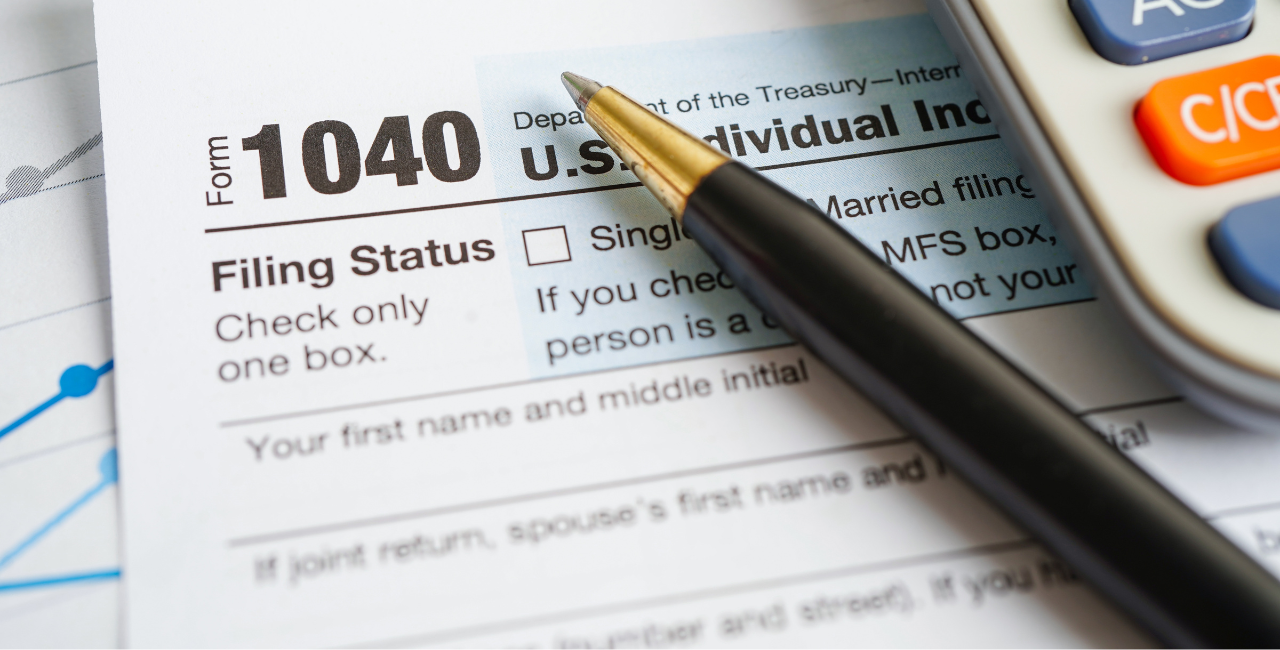
With the onset of tax filing season in the USA, Form 1040 becomes the most important document for filing individual tax returns. Individual and corporate taxes, along with taxes dedicated to funding Social Security and Medicare, are major contributors to the sources of revenue for the U.S. government. Understanding IRS Form 1040 can be an unnerving task. However, with the right knowledge and guidance, understanding and filing your federal tax returns can be a more straightforward and less stressful experience. Let us get into the details to better understand Form 1040.
Jump right in:
Form 1040 – U.S. Individual Income Tax Return is a form used by resident individual taxpayers in the USA to report their incomes and calculate the tax liabilities to file with the IRS. The form requires individuals to report their incomes, deductions, tax credits, and payments to determine the amount of tax owed or the refund to be received. Form 1040 is more than just a tax document; it is a gateway to better understanding your finances in detail.
Most resident individual taxpayers will use this form to report income and determine their tax liabilities irrespective of their level of income or filing status (Single, Married filing jointly, married filing separately, etc.).
However, there are a few variations of the form for different taxpayers:
- Form 1040-SR: This form is an optional alternative to Form 1040 for senior taxpayers (age 65 and older) with simplified tax situations. Form 1040-SR is nearly identical to Form 1040 but is printed using larger fonts and boxes for convenience in filing paper returns.
- Form 1040-NR: This form is for non-resident individuals of the USA if they have income sources in the USA. This form is more extensive compared to Form 1040.
- Form 1040-X: This form is for taxpayers who need to make amendments to correct errors in the tax return after previously filing a Form 1040, 1040-SR, or 1040-NR.
The form is divided into several parts:
- Personal credentials: Details such as SSN, Date of Birth, Name, Home address, etc., for you and your spouse in case of filing joint returns.
- Income: Information on the income earned through Salaries/Tips, Investments, self-employment income during the relevant year.
- Adjustments to income: Information pertaining to expenses and allowances to reduce taxable income.
- Deductions and credits: Details of claimable deductions such as child tax credits and other deductions to reduce taxable income.
- Tax: Calculations of final tax obligations on the adjusted income at the appropriate rates.
- Payment/refund: Final tax liability or refund calculated after considering all the withholding taxes and pre-paid taxes.
Form 1040 requires most individuals with certain levels of gross income to file taxes. If your income exceeds the threshold limits, you are obligated to file Form 1040. Below are the threshold limits for the calendar year 2023:
| Filing Status |
Age at the End of 2023 |
File if Gross Income Was at Least |
| Single |
Under 65 |
$13,850 |
| Single |
65 or older |
$15,700 |
| Married filing jointly |
Under 65 (both spouses) |
$27,700 |
| Married filing jointly |
65 or older (one spouse) |
$29,200 |
| Married filing jointly |
65 or older (both spouses) |
$30,700 |
| Married filing separately |
Any age |
$5 |
| Head of household |
Under 65 |
$20,800 |
| Head of household |
65 or older |
$22,650 |
| Qualifying surviving spouse |
Under 65 |
$27,700 |
| Qualifying surviving spouse |
65 or older |
$29,200 |
IRS Form 1040 is structured to capture comprehensive financial information. Depending on the type of income you need to report, it may be necessary to attach additional schedules:
- Schedule 1: Used for reporting additional income sources or adjustments to income such as alimony, gains or losses from business property sales, unemployment compensation, and more.
- Schedule 2: Used for reporting additional taxes like Alternative Minimum Tax, Self-Employment Taxes, and Net Investment Income Tax.
- Schedule 3: Used for reporting additional credits and payments, including credits for child and dependent care, residential energy credits, and overpayment of taxes from previous years.
Schedules A-SE
| Schedule |
Purpose |
| A |
Used to enter all itemized deductions like medical expenses, mortgage interest, and charitable donations. |
| B |
Used to report interest and ordinary dividends greater than $1,500. |
| C |
Used for reporting profit or loss from business, typically for independent contractors and sole proprietors. |
| D |
Used for reporting capital gains or losses from investments. |
| E |
Used for reporting income or losses from rental real estate, partnerships, S corporations, and more. |
| F |
Used by farmers to report income and expenses from farming. |
| H |
Used for reporting household workers and related taxes. |
| J |
Used by farmers and fishermen to average their income tax over three years. |
| R |
Used for claiming the elderly or disability tax credit. |
| SE |
Used for calculating self-employment tax for those with profits of at least $400. |
What are the Tax Rates for 2023 to be Filed in 2024?
| Tax Rate |
Single |
Married Filing Jointly |
Married Filing Separately |
Head of Household |
| 10% |
$0 to $11,000 |
$0 to $22,000 |
$0 to $11,000 |
$0 to $15,700 |
| 12% |
$11,001 to $44,725 |
$22,001 to $89,450 |
$11,001 to $44,725 |
$15,701 to $59,850 |
| 22% |
$44,726 to $95,375 |
$89,451 to $190,750 |
$44,726 to $95,375 |
$59,851 to $95,350 |
| 24% |
$95,376 to $182,100 |
$190,751 to $364,200 |
$95,376 to $182,100 |
$95,351 to $182,100 |
| 32% |
$182,101 to $231,250 |
$364,201 to $462,500 |
$182,101 to $231,250 |
$182,101 to $231,250 |
| 35% |
$231,251 to $578,125 |
$462,501 to $693,750 |
$231,251 to $346,875 |
$231,251 to $578,100 |
| 37% |
$578,126 or more |
$693,751 or more |
$346,876 or more |
$578,101 or more |
The return is due on or before the 15th day of the fourth month after the close of your fiscal year. For example, if your fiscal year is the calendar year, then the due date will be April 15 of each year. To extend the filing date, taxpayers may need to file Form 4868 and seek an extension until October 15. Note that Form 4868 only extends the filing date and not the payment date.
What are the Various Documents that Taxpayers Must Keep Ready While Filing?
It is important to stay ready with all required documents and personal details for filing the returns with the IRS. The most important ones are:
- Social Security Number or Tax ID Number
- Spouse’s Full Name, Social Security Number or Tax ID Number, and Date of Birth
- Identity Protection PIN, if one has been issued
- Foreign Reporting and Residency Information, if applicable
- If Employed: Form W-2
- If Unemployed: Form 1099-G
- If Self-Employed: Forms 1099, Schedules K-1, Records of all expenses
- Record of all incomes, expenses, allowances, and deductions if not covered by any forms
What are the Most Common Mistakes to Avoid While Filing Form 1040?
While filing the form, it is possible to commit a few errors. It is important to avoid errors that can lead to penalties or an audit from the IRS. Here are some common mistakes to avoid:
- Not Keeping Proper Details: Ensure accurate personal information such as name, Social Security Number, and home address. Errors in these details can cause delays or issues.
- Making Mathematical Errors: Double-check calculations to avoid common math mistakes.
- Not Checking for Typos: Double-check everything to catch any typos or errors in data entry.
- Incorrectly Entering Negative Amounts: Follow IRS instructions for entering negative numbers correctly.
- Not Using E-File: Electronic filing often detects and corrects common errors.
- Missing Attachments: Ensure all required forms and schedules are attached and in the correct order.
- Incorrect Mailing Address: Use the correct address for mailing your tax return.
- Not Keeping Copies: Always keep a copy of your signed return and all schedules for your records.
Conclusion
The golden rule is to always double-check your returns before submitting them to the IRS. Even after filing, keep a copy of your signed return, along with an acknowledgment proof of filing. Past tax returns will be useful for future filings or if you need to file an amended return.
It is imperative to seek professional guidance to accurately complete Form 1040 and avoid common filing errors. Reach out to our professional experts at Water and Shark for an accurate and smooth tax filing process.