Introduction: What are Dark Patterns?
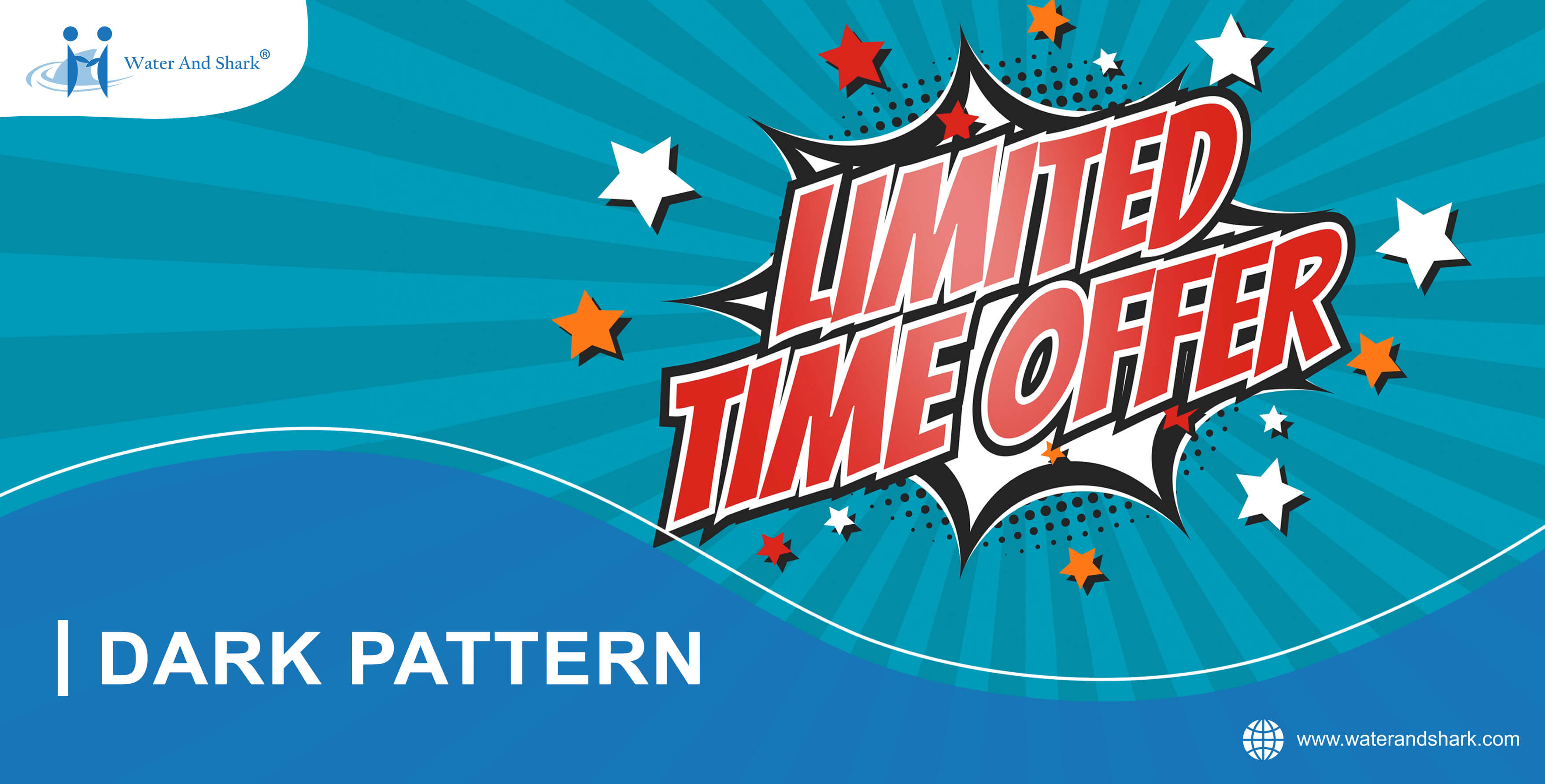
“Hurry, a limited period! This deal expires in 10 minutes!” Have you ever come across these phrases while shopping online? These are ‘Dark Patterns’. Dark Patterns are deceptive or manipulative techniques used by e-commerce businesses or organizations to gain an unfair advantage over consumers and mislead them. These practices can take various forms and are often designed to mislead, trick, or confuse consumers into opting for a product or service that they may or may not require at that time.
As online commerce continues to expand, dark patterns pose a growing threat to Indian consumers. These deceptive tactics can have various negative effects on consumers, including:
- Misleading Reviews: Dark patterns can result in consumers making choices based on misleading or paid reviews, eroding their ability to make well-informed decisions.
- Financial Harm: Individuals may suffer financial losses incurred when purchasing more expensive products or paying more than initially disclosed.
- Privacy Infringements: Dark Patterns can involve unauthorized sharing of personal data, thereby compromising consumers' privacy.
- Psychological Stress and Time Consumption: Deceptive practices can induce psychological distress and consume consumers' valuable time as they navigate through misleading interfaces.
- Unwanted Purchases: Dark patterns can lead to unintended purchases, causing consumers to buy products or services they didn't actually want or need.
Addressing dark patterns is not just about protecting consumers; it's also about promoting fair and ethical practices in the digital marketplace. Recognizing the need to combat these tactics is essential to safeguard consumer rights, foster trust in online platforms, and ensure a more transparent and consumer-friendly digital landscape.
How is the Department of Consumer Affairs Addressing Dark Patterns?
To combat dark patterns, the Department of Consumer Affairs has recently issued a press release urging online retail platforms to refrain from employing dark patterns. Additionally, they have provided specific examples of ten practices deemed as dark patterns. Subsequently, on September 7th, the Central Government introduced Draft Guidelines for the Prevention and Regulation of Dark Patterns, which includes illustrations of these ten practices. These guidelines catalogue a range of deceptive practices employed by online platforms that fall under the umbrella of dark patterns, ultimately detrimental to consumer interests.
Public Feedback and Consultations
The Consumer Affairs Department is currently inviting the public to provide feedback and suggestions regarding these guidelines for a period of 30 days, until October 5, 2023. During the development of these guidelines, consultations and dialogues were conducted with various stakeholders, including e-commerce platforms, legal firms, government representatives, and voluntary consumer organizations (VCOs). These discussions emphasized the importance of avoiding any design or layout elements in their online interfaces that could potentially deceive or manipulate consumer choices, falling into the realm of dark patterns.
How were the Guidelines Developed?
Subsequently, a Task Force was established, comprising representatives from Industry Associations, ASCI, National Law Universities (NLUs), Voluntary Consumer Organizations (VCOs), and prominent e-commerce platforms, including Google, Flipkart, RIL, Amazon, Go-MMT, Swiggy, Zomato, Ola, Tata CLiQ, Facebook, Meta, and Ship Rocket. The Task Force conducted a total of five meetings, during which it solicited input for the draft policy from all its members. These inputs were then submitted to the Department of Consumer Affairs to formulate the current draft guidelines for the prevention and regulation of dark patterns, which are now open for public consultation. The proposed guidelines will be issued under section 18(2)(l) of the Consumer Protection Act 2019.
Specified Dark Patterns
- False Urgency: This strategy means falsely stating or implying the sense of urgency or scarcity to mislead a user into making an immediate purchase or taking immediate action which may lead to a purchase; including:
- Showing false popularity of a product or service to manipulate user decision;
- Stating that quantities of a particular product or service are more limited than they actually are.
Example: Presenting false data on high demand without appropriate context. For instance, “Only 2 rooms left! 30 others are looking at this right now.”
- Basket Sneaking: Means inclusion of additional items such as products, services, or payments to charity/donation at the time of checkout from a platform, without the consent of the user, such that the total amount payable by the user is more than the amount payable for the product(s) and/or service(s) chosen by the user.
Example: Automatic addition of paid ancillary services with a pre-ticked box or otherwise to the cart when a consumer is purchasing a product(s) and/or service(s).
- Subscription Traps: Means the process of:
- Making cancellation of a paid subscription impossible or a complex and lengthy process; or
- Hiding the cancellation option for a subscription; or
- Forcing a user to provide payment details and/or authorization for auto debits for availing a free subscription; or
- Making the instructions related to cancellation of subscription ambiguous, latent, confusing, cumbersome.
- Confirm Shaming: Means using a phrase, video, audio, or any other means to create a sense of fear or shame or ridicule or guilt in the mind of the user, so as to nudge the user to act in a certain way that results in the user purchasing a product or service from the platform or continuing a subscription of a service.
Example: A platform for booking flight tickets using the phrase “I will stay unsecured,” when a user does not include insurance in their cart.
- Forced Action: Shall mean forcing a user into taking an action that would require the user to buy any additional good(s) or subscribe or sign up for an unrelated service, in order to buy or subscribe to the product/service originally intended by the user.
Example: Prohibiting a user from continuing with the use of the product or service for the consideration originally paid and contracted for unless they upgrade for a higher rate or fees.
- Nagging: Shall mean a dark pattern due to which users face an overload of requests, information, options, or interruptions; unrelated to the intended purchase of goods or services, which disrupts the intended transaction.
Example: Websites asking a user to download their app, again and again.
- Interface Interference: Means a design element that manipulates the user interface in ways that:
- Highlights certain specific information; and
- Obscures other relevant information relative to the other information; to misdirect a user from taking an action desired by her.
Example: Designing a light-colored option for selecting “No” in response to a pop-up asking a user if they wish to make a purchase or concealing the cancellation symbol in tiny font or changing the meaning of key symbols to mean the opposite.
- Bait and Switch: Means the practice of advertising a particular outcome based on the user’s action but deceptively serving an alternate outcome.
Example: A seller offers a quality product at a cheap price but when the consumer is about to pay/buy, the seller states that the product is no longer available and instead offers a similar-looking product but more expensive.
- Drip Pricing: Means a practice whereby:
- Elements of prices are not revealed upfront or are revealed surreptitiously within the user experience; or
- Revealing the price post-confirmation of purchase, i.e., charging an amount higher than the amount disclosed at the time of checkout; or
- A product or service is advertised as free without appropriate disclosure of the fact that the continuation of use requires in-app purchase; or
- A user is prevented from availing of a service which is already paid for unless something additional is purchased.
Example: A consumer is booking a flight, the online platform showcases the price as X at the checkout page, and when payment is being made, price Y (which is more than X) has been charged by the platform to the consumer.
- Disguised Ads: Means a practice of posing, masking advertisements as other types of content such as user-generated content or news articles or false advertisements.
How Have Other Countries Addressed the Issue of Dark Patterns?
Regulators in the European Union, United States, and United Kingdom have taken strict measures against dark patterns involving unfair and deceptive practices in online interfaces which were found to be detrimental to consumers. The activities which the platforms were observed to be indulging in include:
- Non-consensual enrollment in subscription programs (USA)
- Pressure selling using misleading countdown clocks (UK)
- Secretly saving credit card information and charging users without consent (USA)
- Putting in place a cancellation process designed to deter consumers from opting out of subscription (Norway)
Concluding Remarks
In summary, dark patterns refer to deceptive strategies employed by online businesses to manipulate consumers. These techniques have detrimental effects, including causing users to make regrettable choices, suffer financial setbacks, experience privacy violations, feel undue stress, and make unintended purchases. The Department of Consumer Affairs has demonstrated its commitment to combatting dark patterns by releasing guidelines and seeking input from the public. Furthermore, cooperative initiatives with industry players underscore the significance of adopting user-friendly digital practices. On an international scale, regulatory bodies have taken measures, underscoring the global concern surrounding dark patterns. In essence, prioritizing the mitigation of dark patterns is essential for safeguarding consumers and fostering transparency and equity in the digital realm.